Home › Actinopterygii › Pleuronectidae › Pacific Halibut (Hippoglossus stenolepis)
SPECIES PROFILE
Pacific Halibut (Hippoglossus stenolepis)
Hippoglossus
IUCN STATUS
Least Concern

CONSERVATION STATUS
Least Concern
CLASS
Actinopterygii
GEOGRAPHICAL RANGE
North Pacific from California to the Bering Sea; major commercial fishery off BC and Alaska
DIET
Carnivore
HABITAT
Cold, deep Pacific waters from BC to Alaska; sandy or gravelly sea floor at continental shelf depths
🔬 Classification
PHYLUM
Chordata
CLASS
Actinopterygii
ORDER
Pleuronectiformes
FAMILY
Pleuronectidae
GENUS
Hippoglossus
📋 Description
SIZE
Commonly 20–80 kg; record females exceed 200 kg and 2.5 m in length
COLORATION
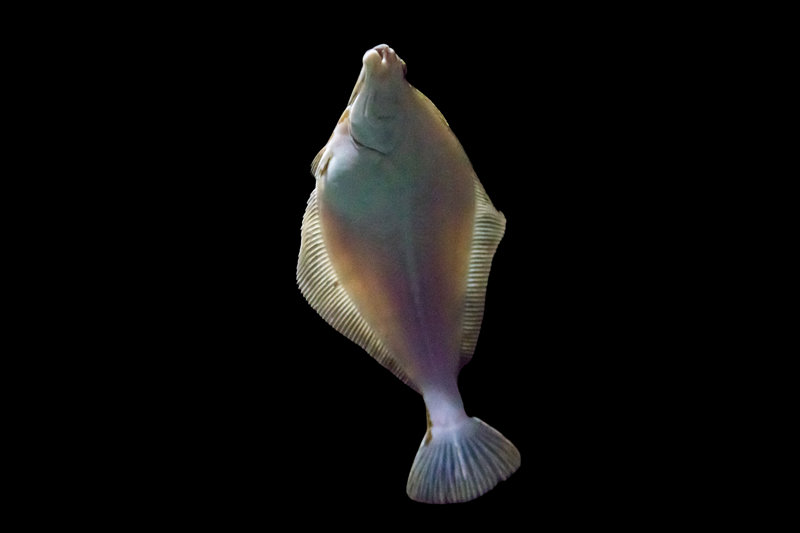
Dark brown to olive on the upper (eyed) side; white on the blind (lower) side; diamond-shaped flat body
ADAPTATIONS
Both eyes migrate to the right side of the head as juveniles; capable of changing skin colour to match the sea floor
🌿 Ecology
HABITAT
Cold, deep Pacific waters from BC to Alaska; sandy or gravelly sea floor at continental shelf depths
DIET
Carnivore
GEOGRAPHIC RANGE
North Pacific from California to the Bering Sea; major commercial fishery off BC and Alaska
REPRODUCTION
Spawns in deep water December to February; larvae drift in currents; females live up to 55 years and grow much larger than males
DIET DETAILS
Feeds on a wide range of fish including cod and pollock, plus octopus, crab, and other invertebrates
⚠️ Threats & Conservation
PRIMARY THREATS
Overfishing historically; International Pacific Halibut Commission quotas now maintain sustainable harvest
💡 Interesting Facts
1
Pacific Halibut is one of the world's largest flatfish; a single large female can produce up to 4 million eggs per spawning season.
2
Halibut are highly migratory and have been tracked moving over 2,000 km; juveniles settle in shallow nursery areas before moving to deeper water.
🔭 Sighting Guide
📍 BEST PLACES TO SIGHT
Haida Gwaii, BC, offers world-class guided halibut fishing in productive offshore waters
Port Hardy on northern Vancouver Island, BC, is a departure point for halibut charters to offshore reefs
Prince Rupert, BC, provides access to productive halibut grounds in Hecate Strait
🗓️ BEST TIME TO SIGHT
June to September is peak recreational season; target flats and rocky reefs at 50–500 m depth along the BC coast.
🎯 SIGHTING TIPS
Summer. Charter boats out of Prince Rupert, Port Hardy, and Campbell River offer guided halibut fishing from June to September.
🏨 Where to Stay
🐾 You Might Also Want to See...

Species
Range
Status
Species
Range
Status
Species
Range
Status
Species
Range
Status