Home › Aves › Trochilidae › Xantus's Hummingbird (Basilinna xantusii)
SPECIES PROFILE
Xantus's Hummingbird (Basilinna xantusii)
Basilinna
IUCN STATUS
Least Concern

CONSERVATION STATUS
Least Concern
CLASS
Aves
GEOGRAPHICAL RANGE
Endemic to the Baja California peninsula from El Rosario south to Cabo San Lucas; found nowhere else on Earth
DIET
Nectarivore
HABITAT
Dense scrub, thorn forest, riparian woodland, and gardens of the southern Baja California peninsula; endemic and non-migratory
🔬 Classification
PHYLUM
Chordata
CLASS
Aves
ORDER
Apodiformes
FAMILY
Trochilidae
GENUS
Basilinna
📋 Description
SIZE
8–9 cm; 3–4 g
COLORATION
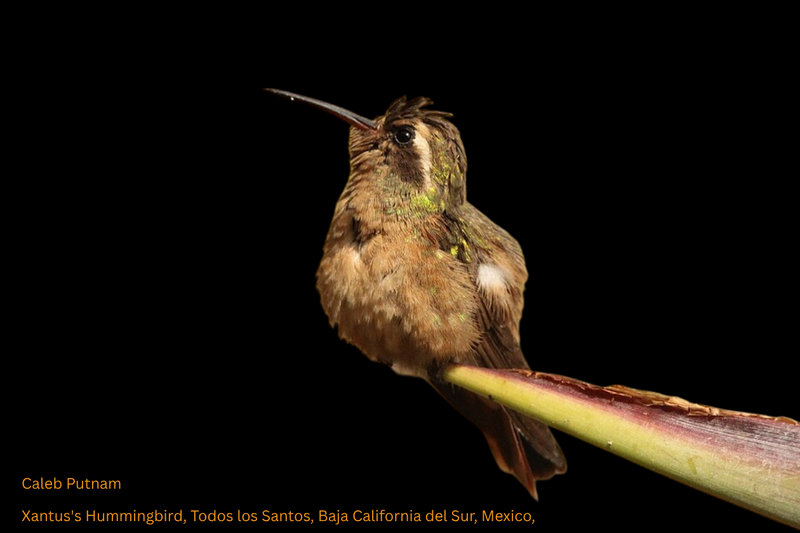
Males: iridescent green above; rufous-cinnamon below; white eye stripe; red bill with black tip; females duller with buffy underparts
ADAPTATIONS
Hovers at flowers using rapid wingbeats (55 per second); long extensible tongue laps nectar; returns to the same feeding routes daily
🌿 Ecology
HABITAT
Dense scrub, thorn forest, riparian woodland, and gardens of the southern Baja California peninsula; endemic and non-migratory
DIET
Nectarivore
GEOGRAPHIC RANGE
Endemic to the Baja California peninsula from El Rosario south to Cabo San Lucas; found nowhere else on Earth
REPRODUCTION
Female builds a tiny cup nest of plant fibres bound with spider silk; 2 eggs; female alone incubates for 15–16 days; 2 broods per year
DIET DETAILS
Nectar from flowers (particularly cirio, elephant tree, and various cacti) supplemented by small insects for protein
⚠️ Threats & Conservation
PRIMARY THREATS
Habitat loss from resort development at Los Cabos; invasive plant species displacing native flowering plants; generally stable within its limited range
💡 Interesting Facts
1
Xantus's Hummingbird is endemic to Baja California and is the only hummingbird species that breeds exclusively on the Baja California peninsula.
2
Like all hummingbirds, Xantus's Hummingbird enters a state of nightly torpor, reducing its metabolic rate by 95% to conserve the enormous energy required for hovering flight.
🔭 Sighting Guide
📍 BEST PLACES TO SIGHT
Sierra de la Laguna Biosphere Reserve near Todos Santos, BCS, has Xantus's Hummingbirds in oak woodland
Cabo San Lucas botanical area, BCS, has Xantus's Hummingbirds visiting flowering desert scrub year-round
Todos Santos, BCS, has Xantus's Hummingbirds in gardens and riparian vegetation near the Pacific coast
🗓️ BEST TIME TO SIGHT
Year-round. Endemic to the Baja California peninsula; found in scrub and riparian areas from El Rosario south; easy to find at flowering plants.
🎯 SIGHTING TIPS
Year-round in scrubby vegetation throughout the southern Baja peninsula; Cape Region botanical gardens and riparian areas have reliable individuals.