Home › Aves › Struthionidae › Ostrich (Struthio camelus)
SPECIES PROFILE
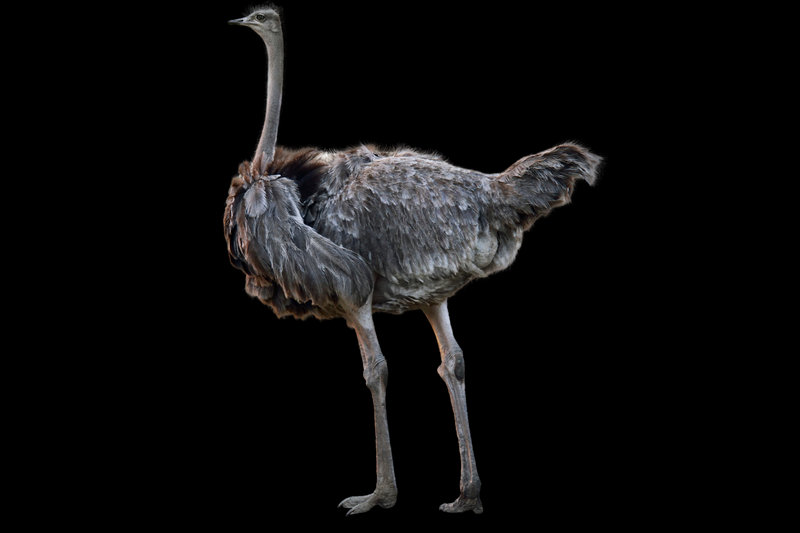
Ostrich (Struthio camelus)
Struthio
IUCN STATUS
Least Concern

CONSERVATION STATUS
Least Concern
CLASS
Aves
GEOGRAPHICAL RANGE
Sub-Saharan Africa, some North African relics
DIET
Omnivorous
HABITAT
Savannas, deserts, plains
🔬 Classification
PHYLUM
Chordata
CLASS
Aves
ORDER
Struthioniformes
FAMILY
Struthionidae
GENUS
Struthio
📋 Description
SIZE
Males 2.1-2.8 m tall, 100-156 kg; females 1.7-2 m, 90-110 kg
COLORATION
Black with white wings/tail (males); grey-brown (females)
ADAPTATIONS
Powerful legs for running (70 km/h); large eyes
🌿 Ecology
HABITAT
Savannas, deserts, plains
DIET
Omnivorous
GEOGRAPHIC RANGE
Sub-Saharan Africa, some North African relics
REPRODUCTION
5-11 eggs in communal nests; incubation 35-45 days
DIET DETAILS
Plants, seeds, small animals
⚠️ Threats & Conservation
PRIMARY THREATS
Habitat loss, historical hunting
💡 Interesting Facts
1
Speed Champion: Ostriches can sprint at 70 km/h and maintain 50 km/h for long distances, outpacing most predators with strides up to 5 meters. Their powerful legs, evolved from flightless ancestors, also deliver kicks strong enough to kill a lion.
2
Egg Giants: Their eggs, the largest of any bird at 1.4 kg, are so tough that they can support an adult human's weight without cracking. These massive eggs have been used by African cultures as water containers for centuries.
🔭 Sighting Guide
📍 BEST PLACES TO SIGHT
Etosha National Park, Namibia
Serengeti National Park, Tanzania
Karoo National Park, South Africa
🗓️ BEST TIME TO SIGHT
June-October: Dry season enhances visibility on open plains where ostriches roam.
🎯 SIGHTING TIPS
Scan grasslands at dawn for ostriches strutting or dust-bathing.
🐾 You Might Also Want to See...

Species
Range
Status
Species
Range
Status
Species
Range
Status
Species
Range
Status