Home › Aves › Otididae › Kori Bustard (Ardeotis kori)
SPECIES PROFILE
Kori Bustard (Ardeotis kori)
Ardeotis
IUCN STATUS
Near Threatened

CONSERVATION STATUS
Near Threatened
CLASS
Aves
GEOGRAPHICAL RANGE
East and Southern Africa
DIET
Omnivorous
HABITAT
Grasslands, savannas
🔬 Classification
PHYLUM
Chordata
CLASS
Aves
ORDER
Otidiformes
FAMILY
Otididae
GENUS
Ardeotis
📋 Description
SIZE
Males 1.2-1.5 m tall, 7-18 kg; females smaller, 3-7 kg
COLORATION
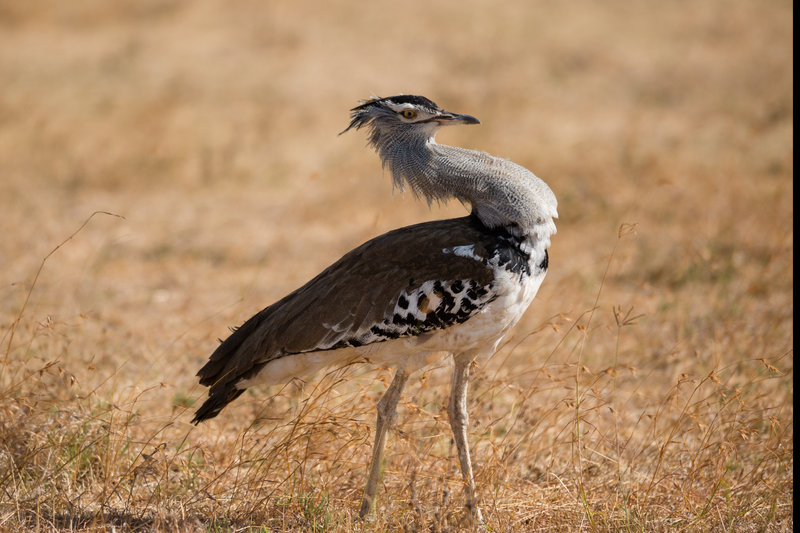
Grey-brown with white belly; crest on head
ADAPTATIONS
Heavy for limited flight; strong legs for walking
🌿 Ecology
HABITAT
Grasslands, savannas
DIET
Omnivorous
GEOGRAPHIC RANGE
East and Southern Africa
REPRODUCTION
1-2 eggs on ground; incubation 23-28 days
DIET DETAILS
Insects, small vertebrates, plants
⚠️ Threats & Conservation
PRIMARY THREATS
Habitat loss, hunting
💡 Interesting Facts
1
Heavyweight Flyer: One of the heaviest birds capable of flight, kori bustards take off with laborious effort but prefer striding across plains, where males inflate their necks in dramatic displays. This makes them a rare sight soaring, despite their size.
2
Courtship Dance: Males perform an elaborate mating ritual, puffing up feathers and ballooning their throats to emit booming calls audible kilometers away. This spectacle, resembling a living bellows, draws females across the vast savanna.
🔭 Sighting Guide
📍 BEST PLACES TO SIGHT
Etosha National Park, Namibia
Serengeti National Park, Tanzania
Kgalagadi Transfrontier Park, South Africa/Botswana
🗓️ BEST TIME TO SIGHT
Scan grasslands at dawn for strutting males displaying courtship behaviors.
🎯 SIGHTING TIPS
June-October: Dry season offers clear views on open plains for spotting bustards.