Home › Mammalia › Tachyglossidae › Short-beaked Echidna (Tachyglossus aculeatus)
SPECIES PROFILE
Short-beaked Echidna (Tachyglossus aculeatus)
Tachyglossus
IUCN STATUS
Least Concern

CONSERVATION STATUS
Least Concern
CLASS
Mammalia
GEOGRAPHICAL RANGE
Found throughout Australia, including Tasmania, and also in New Guinea
DIET
Insectivorous
HABITAT
Wide range of habitats from deserts to rainforests, but prefers areas with soft soil for burrowing
🔬 Classification
PHYLUM
Chordata
CLASS
Mammalia
ORDER
Monotremata
FAMILY
Tachyglossidae
GENUS
Tachyglossus
📋 Description
SIZE
Up to 45 cm long, including the spines; weight ranges from 2 to 7 kg
COLORATION
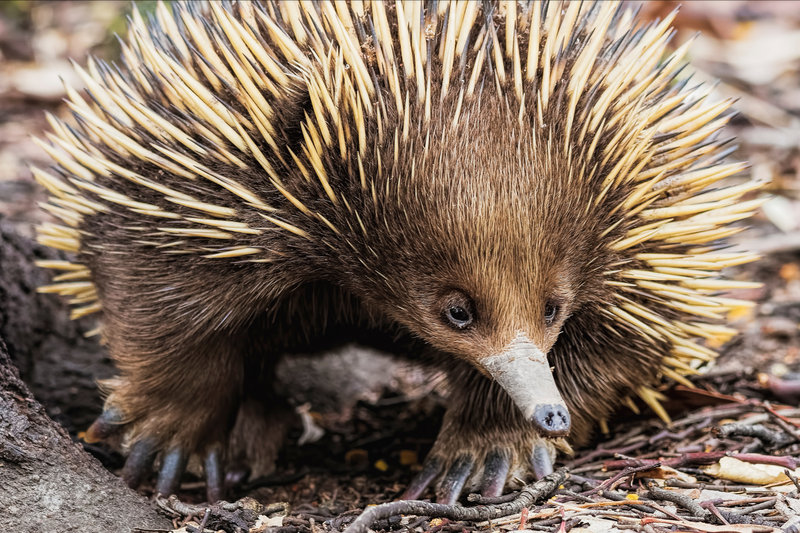
Spines are typically brown or black, with fur between them that can be black, brown, or even cream
ADAPTATIONS
Spiny dorsal armor for protection, long snout for feeding, and strong claws for digging
🌿 Ecology
HABITAT
Wide range of habitats from deserts to rainforests, but prefers areas with soft soil for burrowing
DIET
Insectivorous
GEOGRAPHIC RANGE
Found throughout Australia, including Tasmania, and also in New Guinea
REPRODUCTION
Lays one egg which it incubates in a pouch; after hatching, the young feeds on milk from mammary patches
DIET DETAILS
Feeds mainly on ants and termites, using its long, sticky tongue
⚠️ Threats & Conservation
PRIMARY THREATS
Habitat fragmentation, roadkill, and predation by introduced species
💡 Interesting Facts
1
Monotreme Marvels: Short-beaked echidnas, one of five monotremes, lay a single egg in a pouch, foraging 2,000 ants daily with a 15 cm tongue in Kakadu’s woodlands. Their millions-strong population thrives across diverse habitats, though roads kill 5,000 yearly.
2
Spiny Shields: Curling into a spiny ball in Lamington’s forests, their 5 cm spines deter dingoes, while digging 50 kg of soil monthly aerates ecosystems. Their torpor, seen in Cradle Mountain, conserves energy in cold climates, ensuring survival despite habitat fragmentation.
🔭 Sighting Guide
📍 BEST PLACES TO SIGHT
Kakadu National Park in Northern Territory has Yellow Water Billabong woodland areas for echidna sightings
Lamington National Park in Queensland features Binna Burra section forest trails for echidna sightings
Cradle Mountain-Lake St Clair National Park in Tasmania offers visitor center walking tracks for echidna sightings
🗓️ BEST TIME TO SIGHT
April-October. Cooler months make echidnas more active in forests for foraging.
🎯 SIGHTING TIPS
Search leaf litter at midday to see echidnas foraging.
🐾 You Might Also Want to See...

Species
Range
Status
Species
Range
Status
Species
Range
Status
Species
Range
Status