Home › Amphibia › Dicroglossidae › Indian Bullfrog (Hoplobatrachus tigerinus)
SPECIES PROFILE
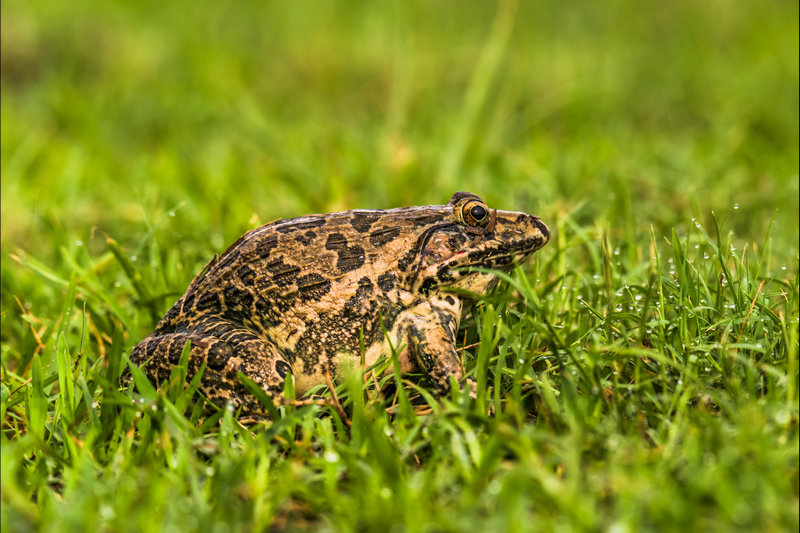
Indian Bullfrog (Hoplobatrachus tigerinus)
Hoplobatrachus
IUCN STATUS
Least Concern

CONSERVATION STATUS
Least Concern
CLASS
Amphibia
GEOGRAPHICAL RANGE
Widespread across India
DIET
Carnivorous
HABITAT
Wetlands, ponds, rice fields
🔬 Classification
PHYLUM
Chordata
CLASS
Amphibia
ORDER
Anura
FAMILY
Dicroglossidae
GENUS
Hoplobatrachus
📋 Description
SIZE
12-17 cm long, 200-500 grams
COLORATION
Yellowish-green with dark spots, robust body
ADAPTATIONS
Powerful hind legs for jumping, moist skin
🌿 Ecology
HABITAT
Wetlands, ponds, rice fields
DIET
Carnivorous
GEOGRAPHIC RANGE
Widespread across India
REPRODUCTION
Lays 3,000-5,000 eggs in water, tadpoles 2-3 months
DIET DETAILS
Insects, small frogs, fish
⚠️ Threats & Conservation
PRIMARY THREATS
Pollution, habitat drainage
💡 Interesting Facts
1
Breeding Blaze: Males turn vivid yellow in Keoladeo's monsoons croaking at 90 decibels with 10000 in wetlands. Their 20 cm bodies leap 2 meters to escape predators.
2
Giant Amphibians: Among India's largest frogs they eat 200 grams of insects daily in Chilika's marshes. Pollution threatens their 2000 sq km aquatic range.
🔭 Sighting Guide
📍 BEST PLACES TO SIGHT
Keoladeo National Park in Rajasthan wetlands host bullfrog sightings
Chilika Lake in Odisha brackish water habitat has bullfrog sightings
Sundarbans National Park in West Bengal mangrove wetlands offer bullfrog sightings
🗓️ BEST TIME TO SIGHT
June-September. Monsoon triggers breeding with loud calls in wetlands.
🎯 SIGHTING TIPS
Visit wetlands at night to hear and spot bullfrogs near waterbodies.
🐾 You Might Also Want to See...

Species
Range
Status
Species
Range
Status
Species
Range
Status
Species
Range
Status