Home › Reptilia › Elapidae › Eastern Brown Snake (Pseudonaja textilis)
SPECIES PROFILE
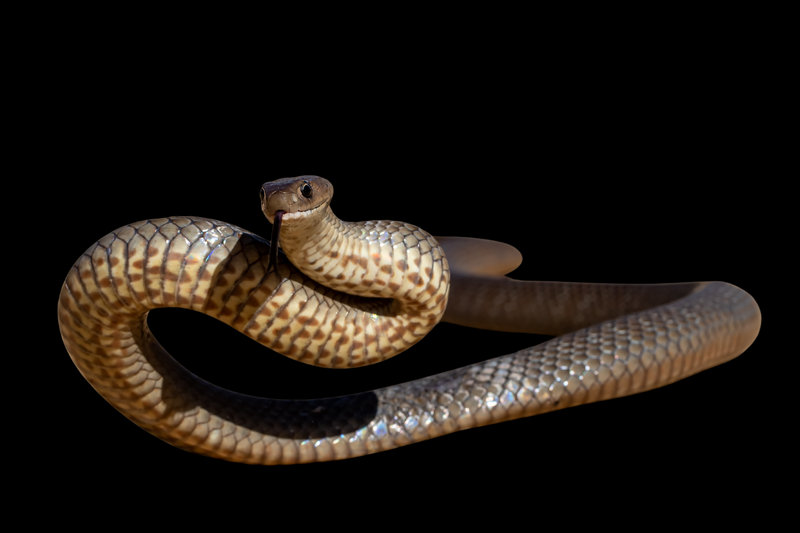
Eastern Brown Snake (Pseudonaja textilis)
Pseudonaja
IUCN STATUS
Least Concern

CONSERVATION STATUS
Least Concern
CLASS
Reptilia
GEOGRAPHICAL RANGE
Eastern Australia, from Queensland to South Australia
DIET
Carnivorous
HABITAT
Grasslands, woodlands, farmlands, urban areas
🔬 Classification
PHYLUM
Chordata
CLASS
Reptilia
ORDER
Squamata
FAMILY
Elapidae
GENUS
Pseudonaja
📋 Description
SIZE
Up to 2 meters long; slender, 0.5-1 kg
COLORATION
Varies from light brown to dark brown; cream or pale yellow belly
ADAPTATIONS
Fast-moving, highly venomous with neurotoxic venom
🌿 Ecology
HABITAT
Grasslands, woodlands, farmlands, urban areas
DIET
Carnivorous
GEOGRAPHIC RANGE
Eastern Australia, from Queensland to South Australia
REPRODUCTION
Lays 10-40 eggs, hatch after 60-80 days
DIET DETAILS
Feeds on small mammals, birds, reptiles, and eggs
⚠️ Threats & Conservation
PRIMARY THREATS
Persecution by humans due to venomous nature
💡 Interesting Facts
1
Lethal Speed: Eastern brown snakes, with 2 mg of neurotoxic venom, strike at 20 km/h, paralyzing rodents in D’Aguilar’s woodlands within minutes. Antivenom saves lives, but their millions-strong population remains a human hazard due to their urban presence.
2
Defensive Strikers: Raising their 2-meter bodies in an S-shape in Blue Mountains, they deter threats, consuming 100 rodents yearly in Murray Valley’s farmlands. Their adaptability, thriving in urban areas, ensures survival, though persecution kills thousands annually.
🔭 Sighting Guide
📍 BEST PLACES TO SIGHT
D'Aguilar National Park in Queensland near Mount Glorious has woodlands for snake sightings with caution
Blue Mountains National Park in New South Wales features Wentworth Falls grassy areas for snake sightings in warmer months
Murray Valley National Park in Victoria near Echuca offers riverine grasslands for snake sightings with caution
🗓️ BEST TIME TO SIGHT
September-March. Spring and summer increase snake activity in forests for hunting.
🎯 SIGHTING TIPS
Join guided walks with herpetologists to spot snakes basking in open areas.