Home › Mammalia › Platanistidae › Ganges River Dolphin (Platanista gangetica)
SPECIES PROFILE
Ganges River Dolphin (Platanista gangetica)
Platanista
IUCN STATUS
Endangered

CONSERVATION STATUS
Endangered
CLASS
Mammalia
GEOGRAPHICAL RANGE
Ganges, Brahmaputra, and tributaries
DIET
Carnivorous
HABITAT
Freshwater rivers, estuaries
🔬 Classification
PHYLUM
Chordata
CLASS
Mammalia
ORDER
Cetacea
FAMILY
Platanistidae
GENUS
Platanista
📋 Description
SIZE
2-2.6 meters long, 70-90 kg
COLORATION
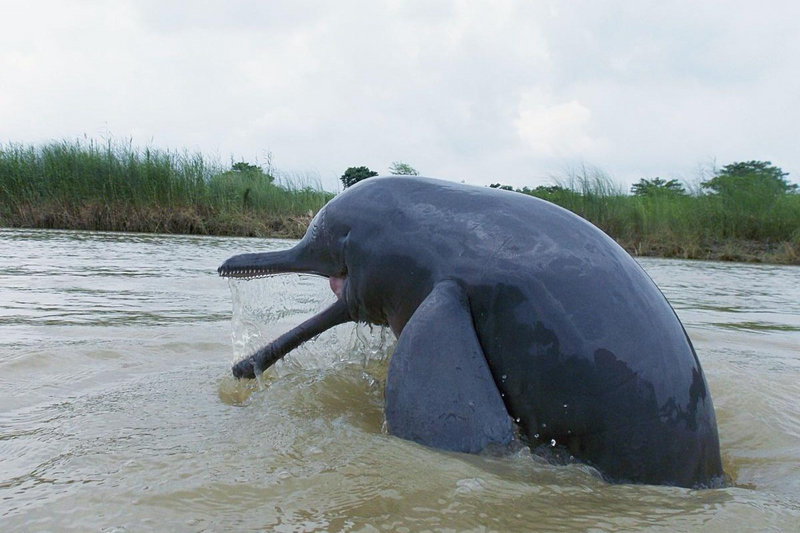
Grey to brownish, long snout
ADAPTATIONS
Blind, uses echolocation, long snout for prey
🌿 Ecology
HABITAT
Freshwater rivers, estuaries
DIET
Carnivorous
GEOGRAPHIC RANGE
Ganges, Brahmaputra, and tributaries
REPRODUCTION
Gestation 9-11 months, one calf every 2-3 years
DIET DETAILS
Fish, crustaceans
⚠️ Threats & Conservation
PRIMARY THREATS
Pollution, dams, fishing nets
💡 Interesting Facts
1
Echo Navigators: Blind dolphins use echolocation detecting fish 30 meters away in Ganges' murky waters with 2000 left. Their 2-meter bodies are India's national aquatic animal.
2
River Guardians: Revered in Bihar's folklore their 50 kg bodies dive 3 minutes catching 1 kg of fish daily. Pollution threatens their 3000 km river range prompting sanctuary protections.
🔭 Sighting Guide
📍 BEST PLACES TO SIGHT
Vikramshila Gangetic Dolphin Sanctuary in Bihar Ganges River hosts dolphin sightings
Chambal River in Uttar Pradesh clear waters offer dolphin sightings
Sundarbans National Park in West Bengal delta region has dolphin sightings
🗓️ BEST TIME TO SIGHT
November-March. Dry season reduces river turbidity improving dolphin sightings.
🎯 SIGHTING TIPS
Take boat tours at dawn to spot dolphins surfacing in calm waters.
🐾 You Might Also Want to See...

Species
Range
Status
Species
Range
Status
Species
Range
Status
Species
Range
Status