Home › Amphibia › Eleutherodactylidae › Coqui Frog (Eleutherodactylus coqui)
SPECIES PROFILE
Coqui Frog (Eleutherodactylus coqui)
Eleutherodactylus
IUCN STATUS
Least Concern

CONSERVATION STATUS
Least Concern
CLASS
Amphibia
GEOGRAPHICAL RANGE
Puerto Rico (native); invasive populations established in Hawaii and Florida.
DIET
Carnivore
HABITAT
Virtually every terrestrial habitat in Puerto Rico — forest, gardens, urban parks, coffee farms, and even buildings.
🔬 Classification
PHYLUM
Chordata
CLASS
Amphibia
ORDER
Anura
FAMILY
Eleutherodactylidae
GENUS
Eleutherodactylus
📋 Description
SIZE
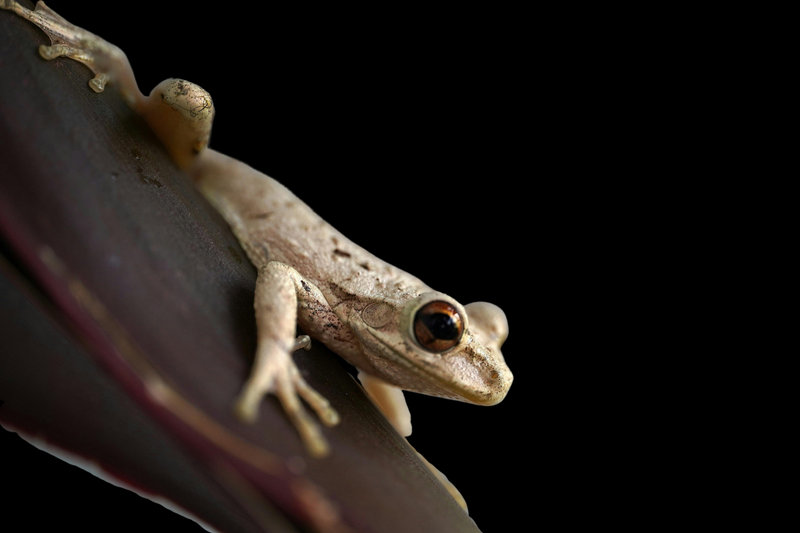
Tiny frog 2.5–4 cm; females slightly larger than males.
COLORATION
Brown, tan, or grey body with variable darker dorsal stripe; pale underparts; adhesive toepads for climbing.
ADAPTATIONS
Adhesive toepads for climbing smooth surfaces; direct development (no tadpole stage) — eggs hatch as tiny froglets.
🌿 Ecology
HABITAT
Virtually every terrestrial habitat in Puerto Rico — forest, gardens, urban parks, coffee farms, and even buildings.
DIET
Carnivore
GEOGRAPHIC RANGE
Puerto Rico (native); invasive populations established in Hawaii and Florida.
REPRODUCTION
Terrestrial direct developer: female lays 12–28 eggs in leaf litter or bromeliad axils; male guards the clutch; no aquatic stage.
DIET DETAILS
Insects, spiders, small invertebrates, and occasionally smaller frogs; nocturnal ambush predator.
⚠️ Threats & Conservation
PRIMARY THREATS
Chytrid fungal disease, habitat loss, and pesticide use; several of the 17 Puerto Rican coqui species are endangered.
💡 Interesting Facts
1
The Coqui is Puerto Rico's national symbol — Puerto Ricans often say "I am Coqui" as a statement of cultural identity.
2
Each of the 17 coqui species has a distinct call and microhabitat; the Common Coqui's "ko-KEE" can exceed 90 decibels.
🔭 Sighting Guide
📍 BEST PLACES TO SIGHT
El Yunque National Rainforest, Puerto Rico — the loudest and most diverse coqui chorus in the world begins at sunset here.
Bosque Estatal de Guánica, Puerto Rico — dry forest supporting multiple rare coqui species not found in wetter habitats.
Any hotel garden or park in Puerto Rico after sunset — Coquis are so abundant they are heard in downtown San Juan.
🗓️ BEST TIME TO SIGHT
Year-round; peak calling activity at dusk and during wet season May–October; males call all night from vegetation.
🎯 SIGHTING TIPS
Step outside any Puerto Rican forest, garden, or hotel at dusk — the loud "ko-KEE" chorus is impossible to miss.
🏨 Where to Stay
🐾 You Might Also Want to See...

Species
Range
Status
Species
Range
Status
Species
Range
Status
Species
Range
Status
More Wildlife in
Species
Species
Species
Species