Home › Malacostraca › Coenobitidae › King Crab (Birgus latro)
SPECIES PROFILE
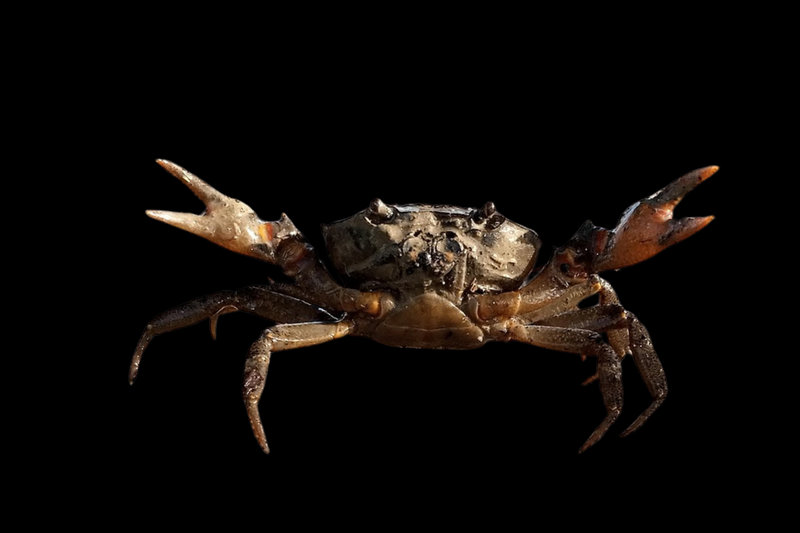
King Crab (Birgus latro)
Birgus
IUCN STATUS
Vulnerable

CONSERVATION STATUS
Vulnerable
CLASS
Malacostraca
GEOGRAPHICAL RANGE
Andaman and Nicobar Islands
DIET
Omnivorous
HABITAT
Coastal forests, beaches
🔬 Classification
PHYLUM
Arthropoda
CLASS
Malacostraca
ORDER
Decapoda
FAMILY
Coenobitidae
GENUS
Birgus
📋 Description
SIZE
30-40 cm wide, up to 4 kg
COLORATION
Blue to reddish-brown, varies with age
ADAPTATIONS
Large claws for cracking coconuts, land-adapted
🌿 Ecology
HABITAT
Coastal forests, beaches
DIET
Omnivorous
GEOGRAPHIC RANGE
Andaman and Nicobar Islands
REPRODUCTION
Lays eggs in sea, larvae marine, adults terrestrial
DIET DETAILS
Coconuts, fruits, small animals
⚠️ Threats & Conservation
PRIMARY THREATS
Habitat loss, overharvesting
💡 Interesting Facts
1
Crab Titans: These 4 kg crabs climb 10-meter trees in South Sentinel's forests with 1000 in Andamans. Their 1-meter leg spans crack coconuts with 3300 N force.
2
Island Survivors: Living 60 years they scavenge 1 kg of fruit daily in Great Nicobar's coasts. Poaching threatens their 500 sq km tropical range.
🔭 Sighting Guide
📍 BEST PLACES TO SIGHT
South Sentinel Island in Andamans remote habitat hosts king crab sightings
Great Nicobar Island coastal forests offer king crab sightings
Little Andaman Island beach fringes provide king crab sightings
🗓️ BEST TIME TO SIGHT
November-March. Dry season improves access to coastal forests where crabs roam.
🎯 SIGHTING TIPS
Search coconut groves at night with guides to spot large crabs.
🐾 You Might Also Want to See...

Species
Range
Status
Species
Range
Status
Species
Range
Status
Species
Range
Status