Home › Mammalia › Macropodidae › Tree-Kangaroos (Dendrolagus spp.)
SPECIES PROFILE
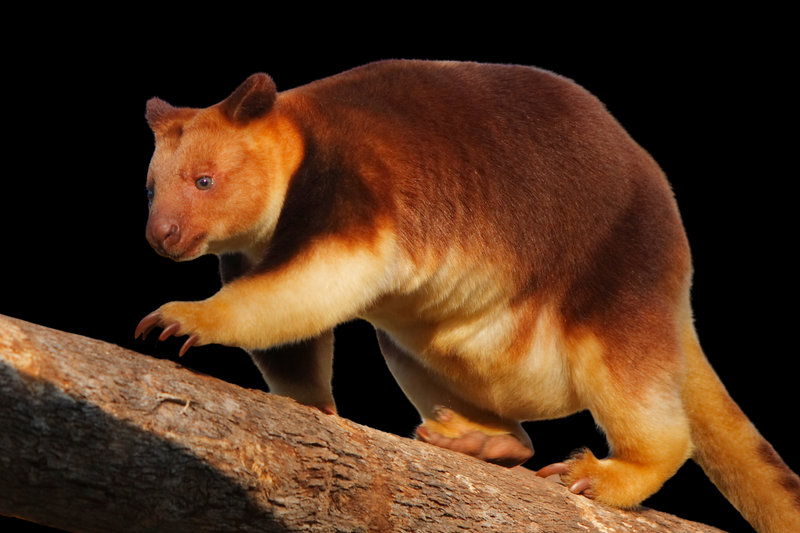
Tree-Kangaroos (Dendrolagus spp.)
Dendrolagus
IUCN STATUS
Endangered

CONSERVATION STATUS
Endangered
CLASS
Mammalia
GEOGRAPHICAL RANGE
Australia: Lumholtz's and Bennett's tree kangaroos in northern Queensland. New Guinea: Matschie's and Goodfellow's tree kangaroos
DIET
Herbivorous
HABITAT
Tropical rainforests, montane forests, and cloud forests
🔬 Classification
PHYLUM
Chordata
CLASS
Mammalia
ORDER
Diprotodontia
FAMILY
Macropodidae
GENUS
Dendrolagus
📋 Description
SIZE
50–80 cm in body length, with a tail of similar length; weighs 6–15 kg
COLORATION
Varies by species; often reddish-brown, grey, or black with distinctive markings
ADAPTATIONS
Strong forelimbs, curved claws, and a long tail for balance; adapted for climbing and leaping between trees
🌿 Ecology
HABITAT
Tropical rainforests, montane forests, and cloud forests
DIET
Herbivorous
GEOGRAPHIC RANGE
Australia: Lumholtz's and Bennett's tree kangaroos in northern Queensland. New Guinea: Matschie's and Goodfellow's tree kangaroos
REPRODUCTION
Females carry a single joey in a pouch for 8–10 months. Joeys stay with their mothers for up to 2 years
DIET DETAILS
Primarily eats leaves, fruits, flowers, and bark. Occasionally consumes eggs and small birds
⚠️ Threats & Conservation
PRIMARY THREATS
Habitat loss due to deforestation for logging and agriculture, hunting for meat and fur in New Guinea, climate change affecting rainforest ecosystems
💡 Interesting Facts
1
Canopy Acrobats: Tree kangaroos leap 9 meters between Daintree’s trees, their 15 kg bodies balanced by tails, consuming 50 kg of leaves monthly. With 2,500 Lumholtz’s left, Atherton’s conservation programs combat logging to protect their rainforest niche.
2
Seed Dispersers: In Huon Peninsula, they spread 1,000 fruit seeds monthly, their diet sustaining rainforest diversity, though hunting threatens their 5,000 population. Their unique climbing, unlike ground kangaroos, makes them vital for canopy ecosystems, seen in Queensland’s tropics.
🔭 Sighting Guide
📍 BEST PLACES TO SIGHT
Daintree Rainforest in Queensland is home to Lumholtz's and Bennett's tree kangaroos for sightings
Atherton Tablelands in Queensland is a hotspot for Lumholtz's tree kangaroo sightings
Huon Peninsula in Papua New Guinea features habitat for Matschie's tree kangaroo sightings
🗓️ BEST TIME TO SIGHT
April-October. Dry season improves visibility in rainforest canopies for foraging.
🎯 SIGHTING TIPS
Join guided treks at dusk to spot kangaroos in trees.