Home › Aves › Cracidae › Horned Guan (Oreophasis derbianus)
SPECIES PROFILE
Horned Guan (Oreophasis derbianus)
Oreophasis
IUCN STATUS
Endangered

CONSERVATION STATUS
Endangered
CLASS
Aves
GEOGRAPHICAL RANGE
Endemic to a handful of cloud forest volcanoes in Guatemala and Chiapas, Mexico; one of the most restricted ranges of any bird
DIET
Herbivore
HABITAT
Undisturbed cloud forest on volcanic peaks at 1,650–3,350 m; restricted to a handful of isolated volcano summits
🔬 Classification
PHYLUM
Chordata
CLASS
Aves
ORDER
Galliformes
FAMILY
Cracidae
GENUS
Oreophasis
📋 Description
SIZE
85 cm; 1.5 kg
COLORATION
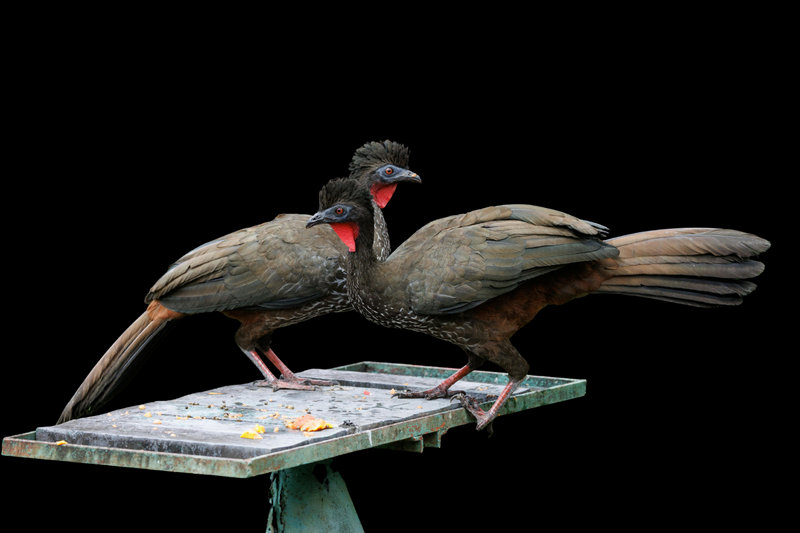
Black head with a distinctive red horn protruding from the crown; black and white body; red facial skin; red legs; spectacular and unmistakable
ADAPTATIONS
Red horn is thought to be a display structure for mate attraction; extremely secretive; spends most time in the forest canopy
🌿 Ecology
HABITAT
Undisturbed cloud forest on volcanic peaks at 1,650–3,350 m; restricted to a handful of isolated volcano summits
DIET
Herbivore
GEOGRAPHIC RANGE
Endemic to a handful of cloud forest volcanoes in Guatemala and Chiapas, Mexico; one of the most restricted ranges of any bird
REPRODUCTION
Builds a flat stick nest in the cloud forest canopy; 2 eggs; poorly studied due to extreme rarity and inaccessibility of habitat
DIET DETAILS
Fruit, leaves, and flowers gathered in the forest canopy; specialises on fruits of cloud forest trees
⚠️ Threats & Conservation
PRIMARY THREATS
Deforestation of the volcanic cloud forests; hunting; extremely small and fragmented range makes any disturbance critical
💡 Interesting Facts
1
The Horned Guan is considered one of the 100 most endangered birds in the world; its entire global population fits on a handful of volcanic peaks and may number fewer than 1,000 individuals.
2
The red "horn" on the Horned Guan's head is unique among birds — no other bird species has a similar cranial adornment; its function is still debated by ornithologists.
🔭 Sighting Guide
📍 BEST PLACES TO SIGHT
Volcán Tacaná near San Marcos, Guatemala, is one of the most accessible sites to search for the Horned Guan
Volcán Zunil near Quetzaltenango is another cloud forest volcano with Horned Guan records
Chicabal lagoon and volcano near San Marcos have cloud forest habitat within Horned Guan range
🗓️ BEST TIME TO SIGHT
Year-round on the cloud forest slopes of Volcán Tacaná near San Marcos; dawn hours in the upper cloud forest are the most productive time.
🎯 SIGHTING TIPS
Year-round. One of the rarest birds in the world; restricted to a few volcanoes in Guatemala and Chiapas; Volcán Tacaná and San Marcos highlands.
🏨 Where to Stay
🐾 You Might Also Want to See...

Species
Range
Status
Species
Range
Status
Species
Range
Status
Species
Range
Status
More Wildlife in
Species
Species
Species
Species