Home › Aves › Pelecanidae › Australian Pelican (Pelecanus conspicillatus)
SPECIES PROFILE
Australian Pelican (Pelecanus conspicillatus)
Pelecanus
IUCN STATUS
Least Concern

CONSERVATION STATUS
Least Concern
CLASS
Aves
GEOGRAPHICAL RANGE
Throughout Australia, coastal/inland, occasionally Tasmania
DIET
Carnivorous
HABITAT
Coastal waters, estuaries, inland lakes, rivers
🔬 Classification
PHYLUM
Chordata
CLASS
Aves
ORDER
Pelecaniformes
FAMILY
Pelecanidae
GENUS
Pelecanus
📋 Description
SIZE
1.8 meters long, wingspan 2.3-2.5 meters; 4-13 kg
COLORATION
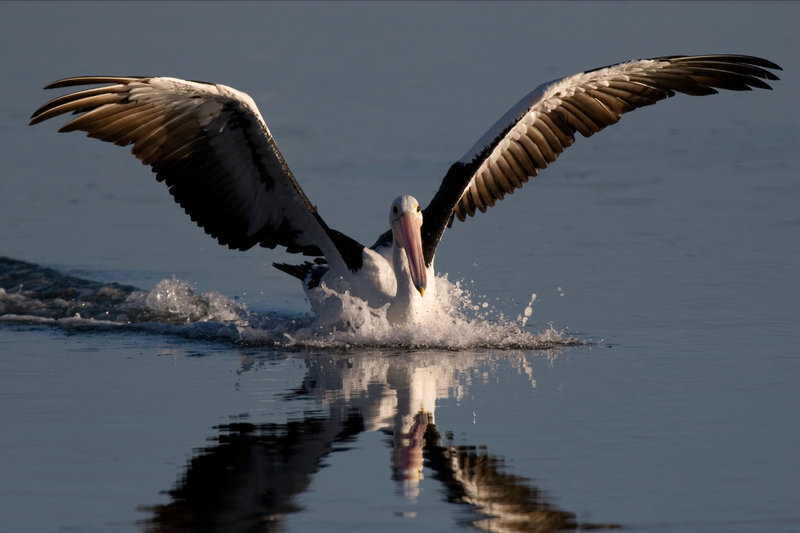
White with black wingtips; pinkish bill, large expandable pouch
ADAPTATIONS
Massive bill and pouch for scooping fish, strong wings for soaring
🌿 Ecology
HABITAT
Coastal waters, estuaries, inland lakes, rivers
DIET
Carnivorous
GEOGRAPHIC RANGE
Throughout Australia, coastal/inland, occasionally Tasmania
REPRODUCTION
Lays 1-3 eggs on ground/low vegetation, incubated 32-35 days; chicks fledge 2-3 months
DIET DETAILS
Primarily fish, crustaceans, occasionally small birds
⚠️ Threats & Conservation
PRIMARY THREATS
Water pollution, overfishing, breeding colony disturbance
💡 Interesting Facts
1
Fish Herders: Australian pelicans scoop 13 liters of fish with 2-meter bill pouches, herding in groups of 50 in Coorong Lagoon, consuming 10 kg daily. Their cooperative feeding supports 100,000 birds, though pollution threatens breeding colonies.
2
Thermal Gliders: Soaring 3,000 meters on thermals, they travel 500 km to Lake Eyre’s floods, their 2.5-meter wings gliding effortlessly. This mobility, seen in Peel Inlet, ensures they exploit ephemeral lakes, maintaining populations despite overfishing impacts.
🔭 Sighting Guide
📍 BEST PLACES TO SIGHT
Coorong National Park in South Australia has Coorong Lagoon and Salt Creek for pelican sightings in summer
Lake Eyre in South Australia attracts pelican flocks during inland lake floods
Peel Inlet in Western Australia near Mandurah offers estuary and foreshore for pelican sightings
🗓️ BEST TIME TO SIGHT
April-October. Dry season concentrates pelicans in wetlands and lakes for feeding.
🎯 SIGHTING TIPS
Take boat tours in Coorong Lagoon, Lake Eyre or Mandurah's Peel Inlet at midday to see pelicans fishing in shallow waters.
🐾 You Might Also Want to See...

Species
Range
Status
Species
Range
Status
Species
Range
Status
Species
Range
Status