Home › Diplopoda › Harpagophoridae (and others) › Millipede (Harpagophoridae spp., e.g., Giant African)
SPECIES PROFILE
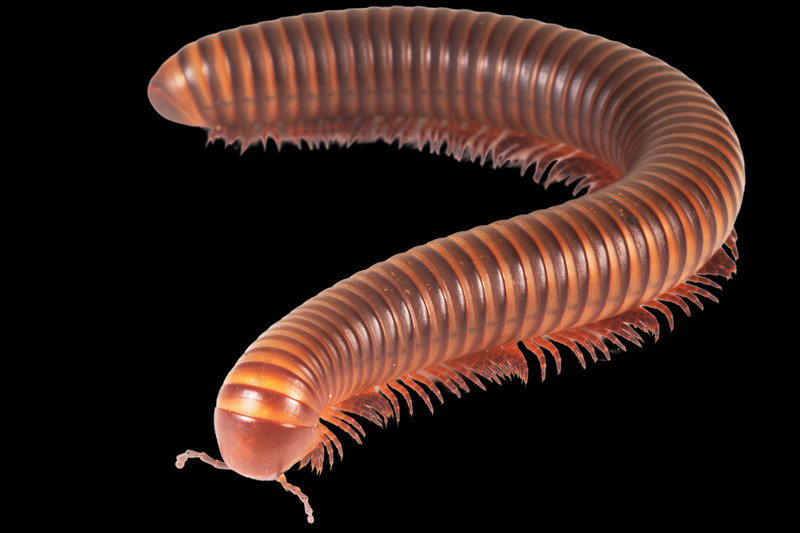
Millipede (Harpagophoridae spp., e.g., Giant African)
Various
IUCN STATUS
Not Evaluated

CONSERVATION STATUS
Not Evaluated
CLASS
Diplopoda
GEOGRAPHICAL RANGE
Southern and East Africa
DIET
Detritivorous
HABITAT
Forests, savannas, under leaf litter
🔬 Classification
PHYLUM
Arthropoda
CLASS
Diplopoda
ORDER
—
FAMILY
Harpagophoridae (and others)
GENUS
Various
📋 Description
SIZE
15-30 cm, 50-100 g
COLORATION
Shiny black with red/yellow bands (varies)
ADAPTATIONS
Many legs (200+); secretes irritants
🌿 Ecology
HABITAT
Forests, savannas, under leaf litter
DIET
Detritivorous
GEOGRAPHIC RANGE
Southern and East Africa
REPRODUCTION
Eggs in soil; juveniles mature in 1-2 years
DIET DETAILS
Dead plant material
⚠️ Threats & Conservation
PRIMARY THREATS
Habitat loss
💡 Interesting Facts
1
Chemical Defenders: When threatened, giant millipedes secrete toxic chemicals that burn skin or repel predators, curling into tight spirals to protect their soft undersides. This defense keeps them safe while they munch through forest floors.
2
Leggy Movers: With over 200 legs, they glide smoothly across terrain, each pair moving in waves to propel their long bodies, a locomotion marvel that's hypnotic to watch. Despite the name, no millipede has exactly 1,000 legs, yet they're close enough to awe.
🔭 Sighting Guide
📍 BEST PLACES TO SIGHT
Kruger National Park, South Africa
Selous Game Reserve, Tanzania
Kafue National Park, Zambia
🗓️ BEST TIME TO SIGHT
November-March: Wet season increases millipede activity on forest floors.
🎯 SIGHTING TIPS
Check leaf litter after rain during guided walks for giant millipedes.
🐾 You Might Also Want to See...

Species
Range
Status
Species
Range
Status
Species
Range
Status
Species
Range
Status