Home › Reptilia › Dermochelyidae › Leatherback Sea Turtle (Dermochelys coriacea)
SPECIES PROFILE
Leatherback Sea Turtle (Dermochelys coriacea)
Dermochelys
IUCN STATUS
Vulnerable

CONSERVATION STATUS
Vulnerable
CLASS
Reptilia
GEOGRAPHICAL RANGE
Nests in tropical and subtropical regions worldwide; forages in cold temperate and subarctic waters; Pacific population nests primarily in Mexico and Costa Rica
DIET
Carnivore
HABITAT
Open ocean (pelagic); nests on tropical and subtropical sandy beaches; the most wide-ranging of all sea turtles
🔬 Classification
PHYLUM
Chordata
CLASS
Reptilia
ORDER
Testudines
FAMILY
Dermochelyidae
GENUS
Dermochelys
📋 Description
SIZE
1.4–1.8 m carapace; 250–700 kg — the world's largest reptile
COLORATION
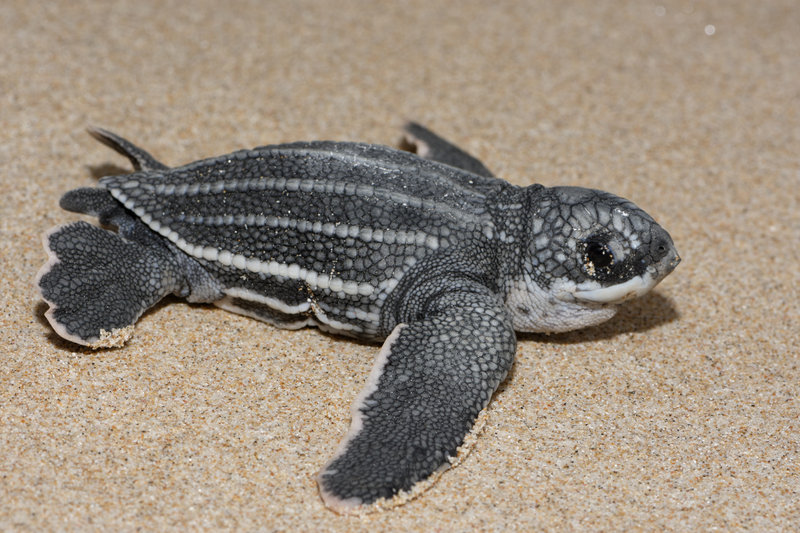
Black rubbery skin with white to pale spots; no hard shell — the back has a leathery carapace with seven longitudinal ridges; enormous front flippers
ADAPTATIONS
Unique among reptiles in lacking a hard shell; generates body heat through its large muscle mass; can dive deeper than 1,200 m — deeper than any other reptile
🌿 Ecology
HABITAT
Open ocean (pelagic); nests on tropical and subtropical sandy beaches; the most wide-ranging of all sea turtles
DIET
Carnivore
GEOGRAPHIC RANGE
Nests in tropical and subtropical regions worldwide; forages in cold temperate and subarctic waters; Pacific population nests primarily in Mexico and Costa Rica
REPRODUCTION
Female returns to natal beach every 2–3 years; lays 4–7 clutches of 80–100 eggs per season; incubation 60–70 days; hatchlings emerge at night
DIET DETAILS
Jellyfish almost exclusively; also salps and other gelatinous zooplankton; consumes its own body weight in jellyfish daily
⚠️ Threats & Conservation
PRIMARY THREATS
Bycatch in longline and drift-net fisheries; plastic bag ingestion (mistaken for jellyfish); egg poaching; nesting beach development; climate change
💡 Interesting Facts
1
The Leatherback Sea Turtle is the world's largest reptile and deepest-diving turtle — it can reach depths of over 1,200 m and travel over 20,000 km across oceans between nesting and foraging areas.
2
Leatherbacks can maintain a body temperature up to 18°C above the surrounding water through a countercurrent heat exchange system, allowing them to forage in near-freezing sub-Arctic waters.
🔭 Sighting Guide
📍 BEST PLACES TO SIGHT
Mexiquillo beach near Maruata, Michoacán, is a major Leatherback Sea Turtle nesting beach on Mexico's Pacific coast
Maruata beach near Aquila, Michoacán, is a protected nesting site for Leatherback and Olive Ridley turtles
Barra de la Cruz beach near Huatulco, Oaxaca, has Leatherback and Olive Ridley nesting from late autumn
🗓️ BEST TIME TO SIGHT
October to January for nighttime nesting on Mexiquillo and Maruata beaches in Michoacán; turtle camp programmes allow supervised nest watching.
🎯 SIGHTING TIPS
Autumn nesting. Leatherbacks nest on Pacific beaches of Michoacán and Guerrero from October to January; Mexiquillo beach is a key site.
🏨 Where to Stay
🐾 You Might Also Want to See...

Species
Range
Status
Species
Range
Status
Species
Range
Status
Species
Range
Status