Home › Mammalia › Myrmecobiidae › Numbat (Myrmecobius fasciatus)
SPECIES PROFILE
Numbat (Myrmecobius fasciatus)
Myrmecobius
IUCN STATUS
Endangered

CONSERVATION STATUS
Endangered
CLASS
Mammalia
GEOGRAPHICAL RANGE
Endemic to southwestern Australia
DIET
Insectivorous
HABITAT
Eucalyptus woodlands, dry sclerophyll forests, and grasslands with abundant termite populations
🔬 Classification
PHYLUM
Chordata
CLASS
Mammalia
ORDER
Dasyuromorphia
FAMILY
Myrmecobiidae
GENUS
Myrmecobius
📋 Description
SIZE
20-29 cm long (body), with a 12-21 cm bushy tail; weighs 280-700 g
COLORATION
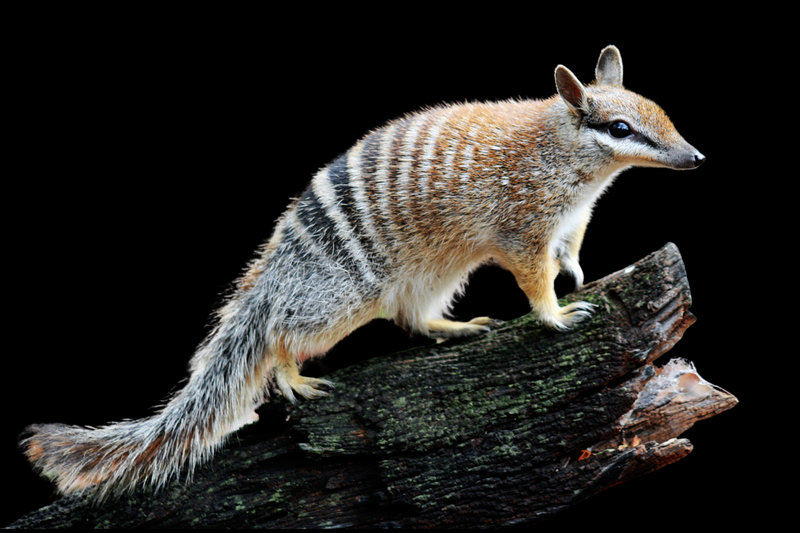
Russet-brown fur with white and black stripes on the back; pale underbelly
ADAPTATIONS
Slender snout, sharp claws for digging, and a diurnal (day-active) lifestyle
🌿 Ecology
HABITAT
Eucalyptus woodlands, dry sclerophyll forests, and grasslands with abundant termite populations
DIET
Insectivorous
GEOGRAPHIC RANGE
Endemic to southwestern Australia
REPRODUCTION
Breeds in January-April; females give birth to 4-6 joeys, Young remain attached to the mother's belly for 6-9 months
DIET DETAILS
Feeds almost exclusively on termites (up to 20,000 per day!). Uses a long, sticky tongue
⚠️ Threats & Conservation
PRIMARY THREATS
Habitat loss due to land clearing and wildfires
💡 Interesting Facts
1
Termite Devourers: Numbats consume 20,000 termites daily, their 10 cm tongue flicking 100 times a minute in Dryandra Woodland, controlling pests. With only 1,000 left, fenced reserves like Perup protect them from foxes, preserving their ecological role.
2
Daylight Foragers: As diurnal marsupials, numbats hunt termites in daylight, their striped fur blending into Scotia Sanctuary’s grasslands, exposing them to hawks. Featured on Australia’s 5-cent coin, their conservation relies on reintroductions to combat habitat loss.
🔭 Sighting Guide
📍 BEST PLACES TO SIGHT
Dryandra Woodland in Western Australia is a stronghold for wild numbat sightings
Perup Nature Reserve in Western Australia has reintroduced populations for numbat sightings
Scotia Sanctuary in New South Wales features a fenced reserve for numbat protection and sightings
🗓️ BEST TIME TO SIGHT
April-October. Cooler months make numbats more active in woodlands for termite foraging.
🎯 SIGHTING TIPS
Join guided tours at midday to see numbats foraging for termites.
🐾 You Might Also Want to See...

Species
Range
Status
Species
Range
Status
Species
Range
Status
Species
Range
Status