
Home › Arachnida › Scorpionidae › Scorpion (Pandinus imperator)
SPECIES PROFILE
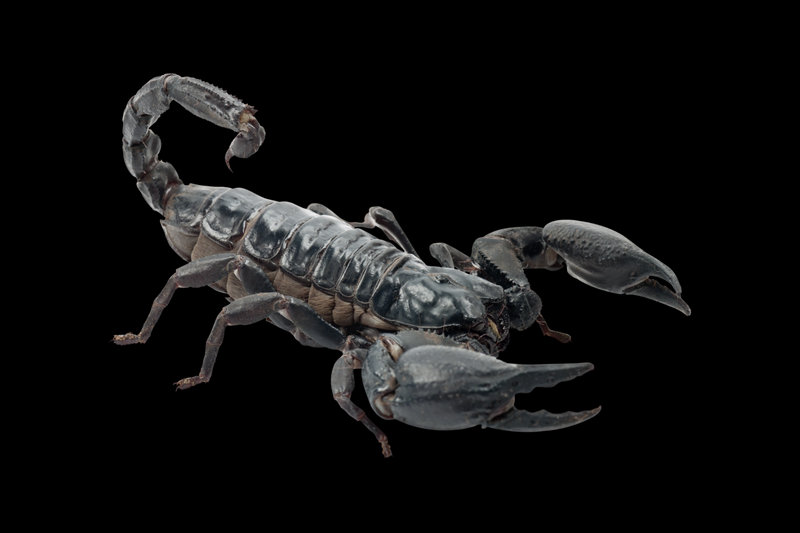
Scorpion (Pandinus imperator)
Pandinus
IUCN STATUS
Not Evaluated

CONSERVATION STATUS
Not Evaluated
CLASS
Arachnida
GEOGRAPHICAL RANGE
West Africa
DIET
Carnivorous
HABITAT
Forests, savannas, burrows
🔬 Classification
PHYLUM
Arthropoda
CLASS
Arachnida
ORDER
Scorpiones
FAMILY
Scorpionidae
GENUS
Pandinus
📋 Description
SIZE
13-20 cm, 30-60 g
COLORATION
Shiny black; large pincers
ADAPTATIONS
Venomous sting; nocturnal hunter
🌿 Ecology
HABITAT
Forests, savannas, burrows
DIET
Carnivorous
GEOGRAPHIC RANGE
West Africa
REPRODUCTION
10-30 live young; carried on mother's back
DIET DETAILS
Insects, small vertebrates
⚠️ Threats & Conservation
PRIMARY THREATS
Pet trade, habitat loss
💡 Interesting Facts
1
Gentle Giants: Despite their size (one of the largest scorpions) emperor scorpions wield mild venom, relying more on massive pincers to crush prey like beetles or lizards. This restraint makes them less deadly than their fearsome look suggests.
2
Glowing Secrets: Under UV light, they fluoresce a vivid blue-green due to proteins in their exoskeleton, a trait whose purpose baffles scientists, possibly aiding night hunting. This eerie glow has made them stars in both nature and captivity.
🔭 Sighting Guide
📍 BEST PLACES TO SIGHT
Pendjari National Park, Benin
Mole National Park, Ghana
Comoé National Park, Côte d'Ivoire
🗓️ BEST TIME TO SIGHT
December-March: Dry season increases scorpion activity under rocks or logs.
🎯 SIGHTING TIPS
Join night walks with UV lights to spot glowing scorpions under rocks.
🐾 You Might Also Want to See...

Species
Range
Status
Species
Range
Status
Species
Range
Status
Species
Range
Status


